A New Homeowner Needs More Than a Drill. Why Sell the Tools Separately?
Imagine someone has just moved into a new home. There are shelves to install, furniture to assemble, and small repairs to complete.
They visit an online hardware store looking for a drill.
They find one, compare a few options, and add it to their cart. But a drill alone might not be enough. They may also need drill bits, screws, wall plugs, and a measuring tape.
The customer now has to return to the product catalogue, search for each accessory, compare options, and add everything individually.
Some customers will do that. Others may purchase only the drill and discover later that they forgot something important.
The store has all the necessary products, but it hasn't made purchasing them together particularly convenient.
What if the merchant offered a ready-made Home Repair Starter Kit instead?
This is where product bundles can make a difference.
Why Product Bundles Make Sense for Hardware Stores
Hardware products are often used together to complete a particular task.
Someone installing a shelf might need a drill, suitable drill bits, screws, wall plugs, and a measuring tool. A person repairing furniture might need a screwdriver set, wood glue, sandpaper, and replacement screws.
These products serve a shared purpose. Presenting them together can make the shopping experience easier to understand.
Consider a few examples:
| Customer requirement | Suggested bundle |
|---|---|
| Installing shelves | Drill, drill bits, screws, and wall plugs |
| Basic home repairs | Screwdriver set, measuring tape, and pliers |
| Furniture assembly | Allen keys, screwdriver, and furniture pads |
| Painting a room | Paint rollers, brushes, masking tape, and tray |
| Gardening basics | Hand trowel, pruning shears, and gardening gloves |
Instead of thinking only about individual products, merchants can organize their catalogue around what customers are trying to accomplish.
Individual Products vs Ready-Made Bundles
There is nothing wrong with selling every product separately. Customers should still have the freedom to choose individual items when they know exactly what they need.
However, bundles offer another way to present related products.
Without a bundle:
A customer searches for a drill, opens another product page for drill bits, searches again for screws, and repeats the process for other accessories.
With a bundle:
The store presents a Home Repair Starter Kit containing the relevant products together. Customers can understand what is included and consider purchasing the complete set.
The advantage is convenience and product discovery. A bundle gives shoppers a clearer starting point, particularly when they are unfamiliar with all the items required for a task.
How to Create Bundles Customers Actually Need
Putting random products together doesn't automatically create a useful bundle. The products should have a logical connection.
Here are a few practical ways to approach bundle creation.
1. Start with a specific customer task
Think about what customers are trying to accomplish. Installing shelves, assembling furniture, painting a room, and maintaining a garden are all useful starting points.
2. Select complementary products
Choose items that naturally work together. A drill and compatible drill bits make more sense as a bundle than a drill paired with an unrelated kitchen accessory.
3. Make the contents clear
Customers should know exactly what they are purchasing. List the included products, quantities, and important compatibility details.
4. Consider the combined price
Calculate the total cost of the included products and decide whether the bundle should offer a special combined price. If you offer a discount, make the saving clear without misleading customers.
5. Avoid unnecessary products
A bundle should solve a specific need. Adding unrelated items just to increase its size can make the offer less attractive.
How Celirox Store Operator Helps With Product Bundles
Celirox Store Operator includes product bundle functionality that Shopify merchants can use to group related products into combined shopping offers.
For a hardware store, this creates an opportunity to organize complementary items into purpose-based kits.
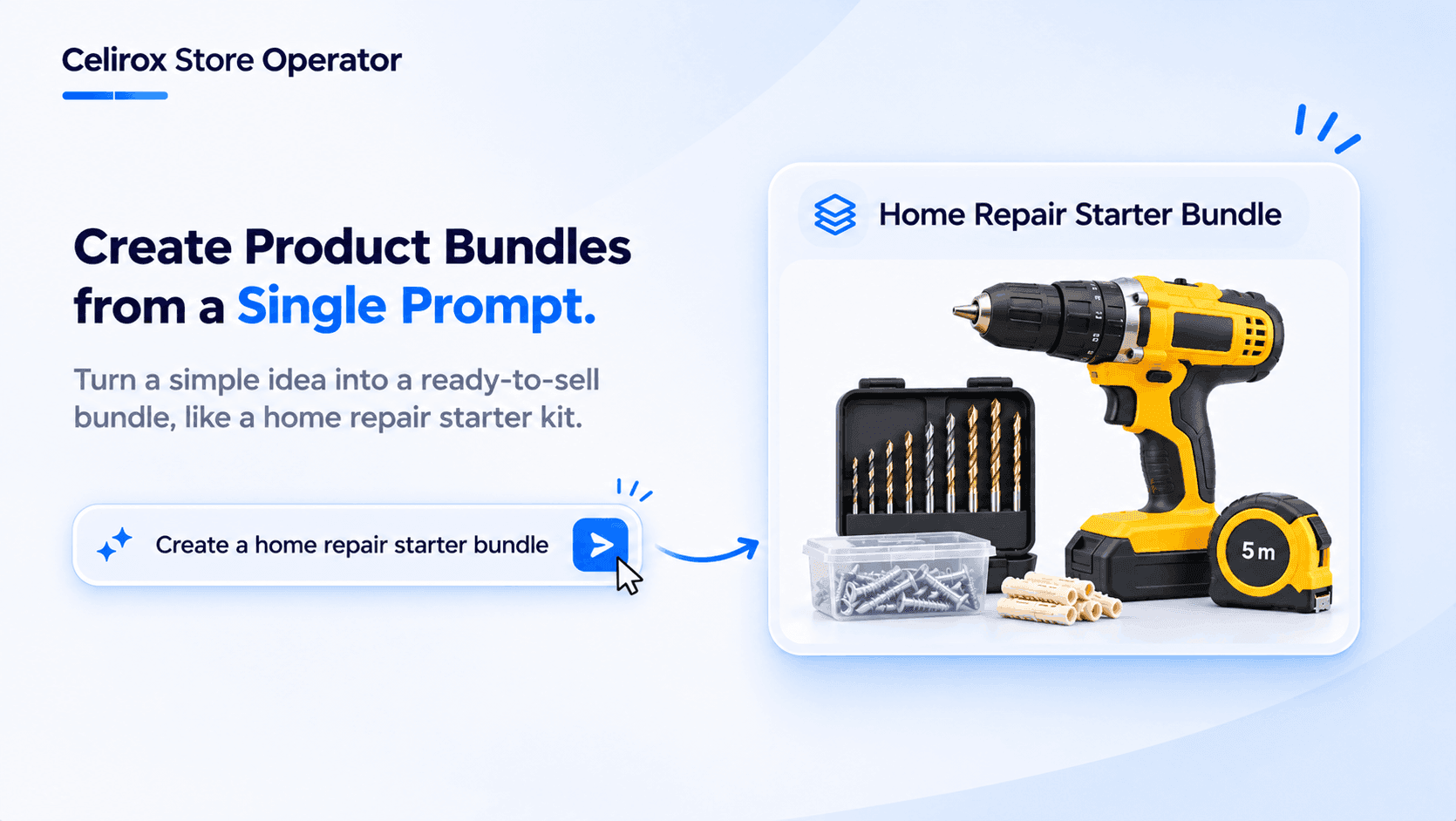
For example, a merchant could create a Home Repair Starter Bundle featuring selected tools and accessories. Rather than expecting customers to discover every item individually, the store can present the grouped offer as one convenient shopping option.
The merchant can build bundles around different customer requirements, such as furniture assembly, basic repairs, or painting projects.
The important part is choosing products that genuinely belong together and presenting the contents clearly. A useful bundle should help customers understand what they are getting and why those products make sense as a set.
Common Product Bundling Mistakes to Avoid
Even a well-designed bundle can become confusing if merchants overlook a few details.
- Combining unrelated products: Every item should contribute to the purpose of the bundle.
- Ignoring compatibility: Check that tools, accessories, and components work together.
- Hiding individual items: Clearly display everything included in the offer.
- Creating oversized bundles: More products don't necessarily mean more value.
- Using unclear pricing: Explain the combined price and any applicable savings accurately.
Start with a small number of useful bundles and improve them based on customer interest and purchasing behaviour.
Frequently Asked Questions
What are product bundles in Shopify?
Product bundles group two or more related products into a combined shopping offer. They help merchants present complementary products together instead of relying entirely on customers to discover each item separately.
Are product bundles useful for hardware stores?
Yes. Many hardware products are used together for specific tasks. Merchants can create kits for furniture assembly, home repairs, painting, gardening, and other common projects.
Should every product be included in a bundle?
No. Bundles work best when the included products have a clear relationship. Start with products that naturally complement one another and serve a specific customer requirement.
Do product bundles always need a discount?
No. A bundle can offer convenience even without a price reduction. If a merchant chooses to offer a discount, the combined price and savings should be communicated accurately.
Can customers still purchase individual products?
That depends on how the merchant configures the store and its bundle offering. Merchants should make individual purchasing options clear where they want customers to retain that choice.
Sell the Complete Solution, Not Just the Individual Tool
Customers don't always think in terms of product categories. Someone installing a shelf is thinking about getting the shelf installed, not browsing five different hardware categories.
Product bundles help merchants organize related products around those real-world needs.
For Shopify hardware stores, a thoughtfully created starter kit can make product discovery easier and give customers a more convenient way to purchase complementary items together.
Start with one common customer task, select the products needed to complete it, and create a bundle that makes the shopping decision simpler.
Explore Celirox Store Operator to learn more about its product bundle and store management features.