A Customer Adds One Product to Their Cart. Could They Be Buying Two?
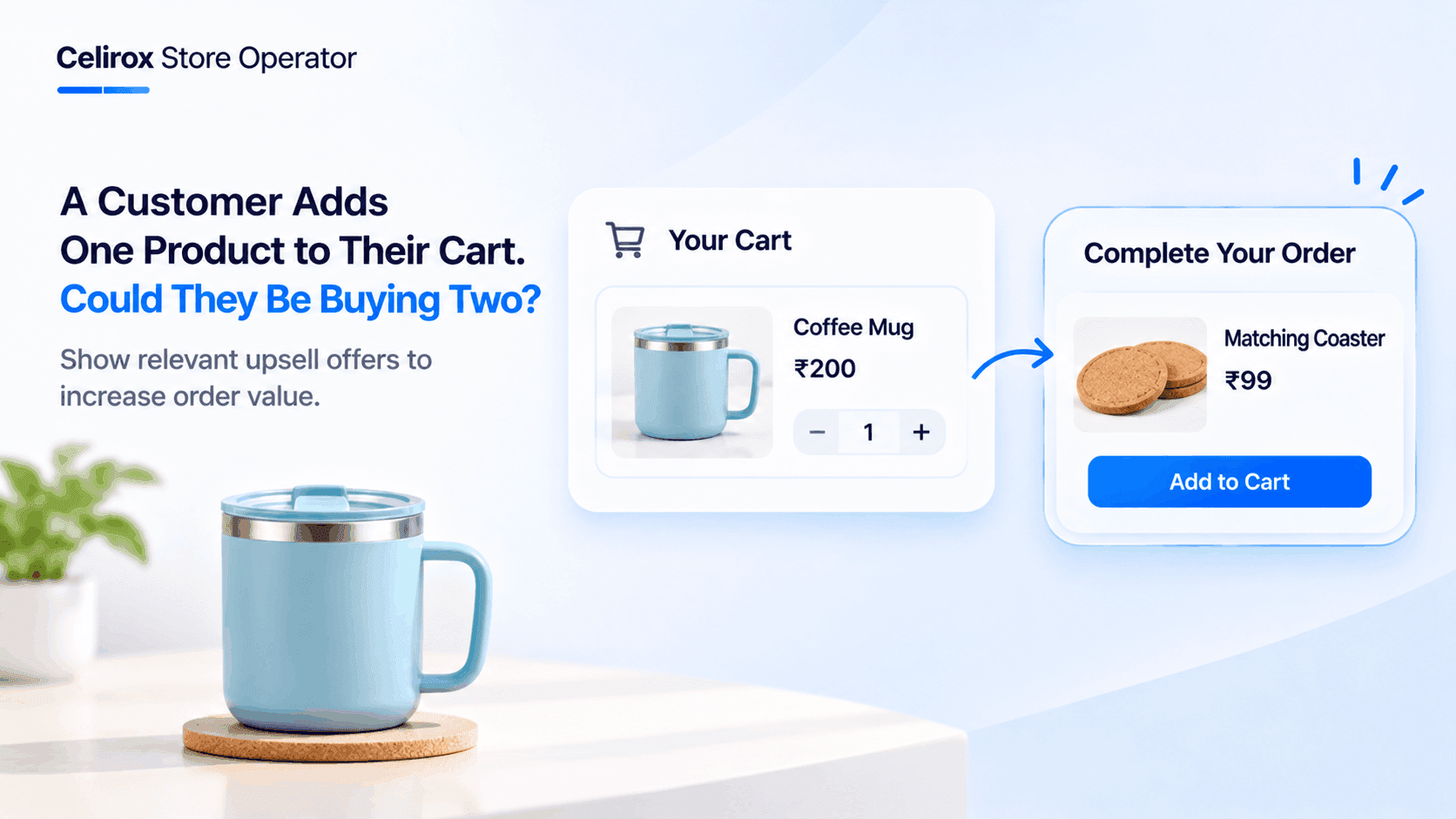
Imagine someone visiting an online store to buy a coffee mug.
They find a design they like, check the price, select the quantity, and add it to their cart. The product is exactly what they came for. They are ready to complete the purchase.
But there is something else they might find useful: a matching coaster, a coffee accessory, or even another mug for someone at home.
The store has these products available, but the customer never sees a relevant suggestion during their shopping journey. They proceed directly to checkout and place an order for just one item.
The merchant makes the sale, but misses an opportunity to introduce another useful product.
This is where upselling can make a difference.
Why Customers Don't Always Discover Complementary Products
Customers usually arrive at an online store with a particular product in mind. They search, compare options, and focus on the item they want.
They don't necessarily browse every category or explore every related product before checking out.
For example, a customer buying a coffee mug might also be interested in:
- A matching coaster.
- A coffee storage container.
- A second mug in another colour.
- A complementary kitchen accessory.
These products may already exist in the store. The challenge is making customers aware of them without forcing them to search all over again.
A useful upsell offer gives shoppers another option to consider while they are already making a purchase decision.
What Makes an Upsell Offer Useful?
Showing another product is not enough. The suggestion should make sense alongside the original purchase.
Consider these examples:
| Original purchase | Complementary offer |
|---|---|
| Coffee mug | Matching coaster |
| Laptop | Laptop sleeve |
| Makeup brush set | Makeup sponge |
| Water bottle | Cleaning brush |
| Lunch box | Insulated carry bag |
The goal is not to persuade every customer to buy more products. It is to help customers discover something relevant that they may genuinely want.
A random product recommendation can distract shoppers. A relevant suggestion can make their purchase more convenient.
How Shopify Upsell Offers Help Merchants
Shopify merchants can use upsell functionality to present additional products as part of the shopping experience.
Instead of relying entirely on customers to discover complementary products themselves, merchants can create offers around products that naturally go together.
For example, a store selling coffee mugs could create an offer for a matching accessory. A customer purchasing a mug gets an opportunity to consider the additional item before completing the order.
Merchants should focus on a few practical principles:
- Keep offers relevant: Recommend products that genuinely complement the original item.
- Avoid overwhelming customers: A small number of useful suggestions is better than a crowded collection of unrelated products.
- Consider the price: An additional purchase should feel reasonable in relation to the original order.
- Review performance: Monitor whether customers accept the offers and whether they contribute to order value.
Upselling should improve the shopping experience, not interrupt it.
How Celirox Store Operator Fits In
Celirox Store Operator includes upsell functionality that helps Shopify merchants introduce additional product offers into their store.
For a store selling coffee mugs, this creates an opportunity to present complementary products rather than depending only on customers browsing the entire catalogue.
Merchants can use this functionality as part of a broader approach to increasing order value and making related products easier to discover.
The important part is choosing offers that make sense for the products customers are already considering. The objective is not simply to add another item to every order. It is to make a useful additional purchase possible.
Frequently Asked Questions
What is an upsell in Shopify?
An upsell is an offer that encourages a customer to purchase an additional or higher-value product during their shopping journey. It can help merchants introduce relevant products and create opportunities to increase order value.
Is upselling the same as cross-selling?
They are related, but not identical. Upselling generally encourages a customer to consider an additional or upgraded purchase. Cross-selling focuses on complementary products that go alongside the original purchase. In everyday ecommerce discussions, the terms are sometimes used interchangeably.
What products should I recommend as upsells?
Start with products that naturally complement what customers are buying. For example, suggest a laptop sleeve with a laptop or a makeup sponge alongside a makeup brush set. Relevance matters more than the number of offers.
Does every customer need to accept an upsell?
No. An upsell is an optional offer, not a requirement. Customers should always be able to continue with their original purchase without feeling pressured.
Can upselling help increase average order value?
It can create opportunities to increase average order value when customers accept relevant additional offers. Results depend on product selection, pricing, offer presentation, and customer preferences.
The Next Product Should Make Sense
A customer who adds one product to their cart has already shown interest in your store. That moment can be an opportunity to introduce something else they may find useful.
You don't need to fill the shopping experience with endless recommendations. Start with a few complementary products, make the offers relevant, and observe how customers respond.
Sometimes, a better shopping experience begins with helping customers discover the product they didn't know they needed.
Explore Celirox Store Operator to learn more about its upsell and store management features.