A $2,000 Order Needs More Reassurance Than a $20 Order.
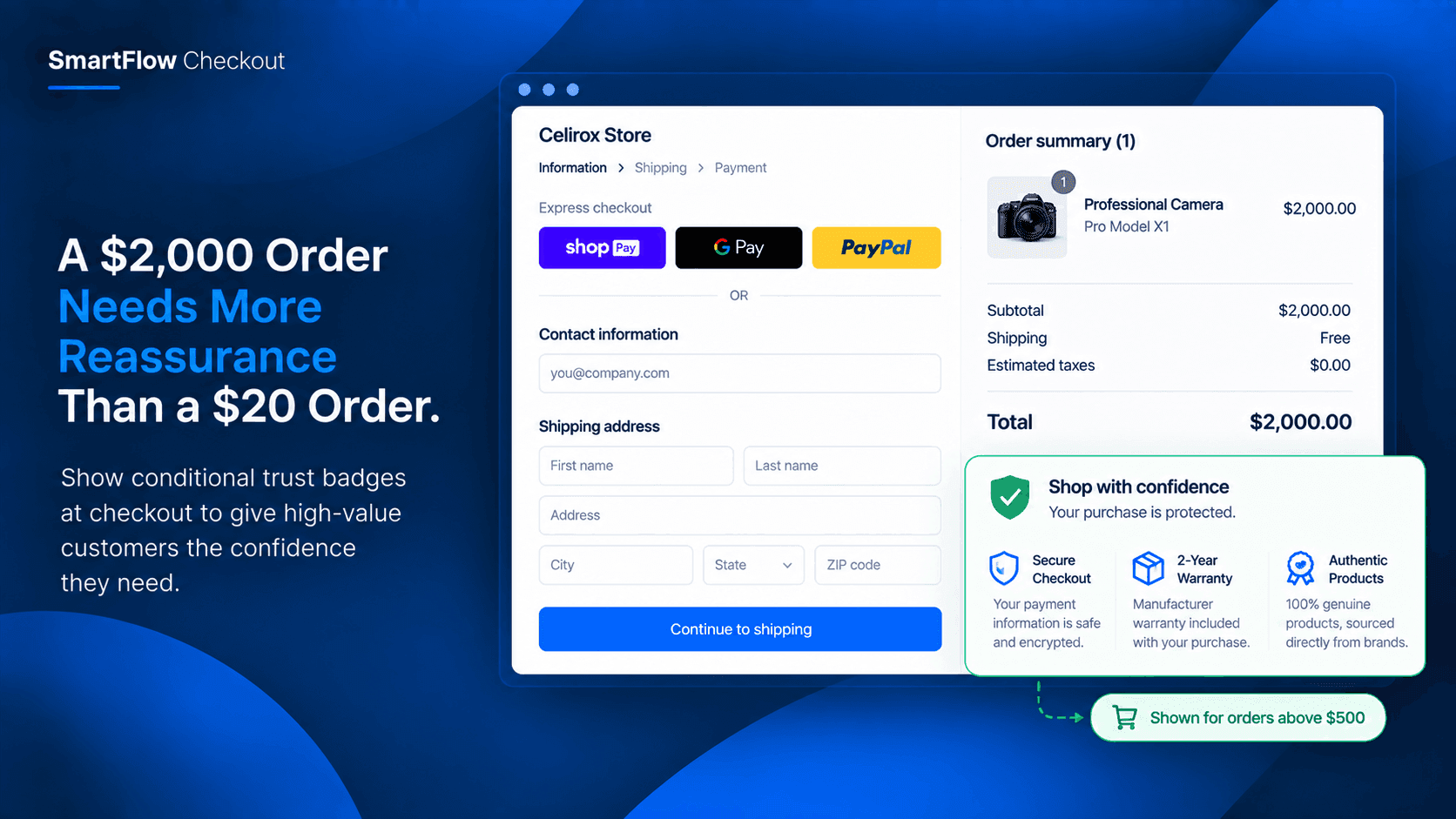
A customer has found the product they want.
They have checked the specifications.
They have compared the options.
They added it to the cart.
Now they are at checkout.
The total is $2,000.
And suddenly, the decision feels different.
Buying a $20 product online can feel almost automatic.
Spending $2,000 requires another level of confidence.
The customer may be wondering:
Is this store trustworthy?
Is my payment secure?
What happens if something goes wrong?
The merchant may already have answers to those questions.
The problem is that the customer needs to feel confident at the moment they are about to pay.
That is where relevant trust messaging can help.
High-Value Orders Feel Different
Not every purchase carries the same level of hesitation.
A customer buying a low-cost accessory may complete checkout without thinking twice.
A customer spending thousands on a premium product has more at stake.
The purchase may require more consideration.
That does not necessarily mean the customer needs a longer checkout.
It can mean they need the right reassurance at the right moment.
A simple trust badge can communicate something important without asking the customer to leave checkout and search for the information themselves.
The Same Message Isn't Always Useful
Many stores display trust messaging across their checkout experience.
That can be useful.
But there is also a difference between showing the same collection of badges to every customer and showing reassurance when it is particularly relevant.
Consider two orders.
Order A: $25
Order B: $2,000
Both customers see exactly the same checkout.
But the second customer may have very different concerns.
The merchant could use order value as a reason to provide additional reassurance for the high-value purchase.
Put Reassurance Where The Decision Happens
The customer is not thinking about trust badges while browsing the homepage.
They are thinking about them when they are about to enter payment information.
That makes checkout an important place for reassurance.
The customer has already decided what to buy.
The remaining question is whether they feel comfortable completing the transaction.
SmartFlow Checkout provides Trust Badges as part of its checkout customization capabilities, with conditions that can be used to control when they appear. :contentReference[oaicite:0]{index=0}
That means a merchant can make the message more relevant instead of simply adding more elements to every checkout.
Make The Badge Match The Concern
A trust badge should communicate something meaningful.
For a high-value purchase, a merchant might want to highlight:
Secure payment
Money-back guarantee
Warranty
Authenticity
Customer protection
The exact reassurance depends on the business.
The important part is that the badge should support a genuine customer concern.
It should not make a claim the business cannot support.
A Simple High-Value Example
Imagine a Shopify store selling premium electronics.
A customer adds a $2,000 professional camera to their cart.
At checkout, a conditional trust badge appears:
2-Year Warranty
Secure Checkout
Authentic Products
The customer does not have to search the website for those assurances.
They are visible while the customer is making the final purchase decision.
The store has not changed the entire checkout.
It has simply made relevant information easier to notice.
Use Order Value As The Trigger
One practical way to make the experience more relevant is to use the order value.
For example:
Orders below $500
→ standard checkout experience.
Orders above $500
→ show additional reassurance.
Orders above $1,500
→ show specific warranty or protection information.
The exact thresholds are determined by the merchant.
The point is that the checkout experience can respond to the context of the order.
SmartFlow supports conditional Trust Badges, including conditions based on order value and specific products. :contentReference[oaicite:1]{index=1}
Product-Specific Reassurance Can Work Too
Sometimes order value is not the only useful signal.
A particular product may need more explanation regardless of the total cart value.
For example, a premium watch may have an authenticity guarantee.
A specialized piece of equipment may have a long warranty.
A high-end furniture item may have a specific protection policy.
The merchant can associate relevant trust messaging with the products that need it.
That keeps the reassurance connected to the actual purchase.
Don't Turn Checkout Into A Badge Wall
More trust badges do not automatically create more confidence.
If customers see ten different badges, they may stop paying attention.
The goal should be clarity.
A few relevant assurances are more useful than a collection of generic symbols.
Think about what the customer is most likely to wonder.
Then answer that concern.
For example:
Premium product → Warranty
Luxury product → Authenticity
Expensive order → Payment security
The message should have a reason to be there.
Reassurance Should Support The Purchase
Trust messaging works best when it supports what the customer is already considering.
The customer should not feel like the store is trying to distract them from the purchase.
Instead, the message should reinforce confidence:
“Here is something important you should know before completing your order.”
That makes the badge part of the buying experience rather than another promotional element.
Think About The Customer's Risk
A $2,000 purchase can represent a meaningful amount of money to a customer.
That can make ordinary questions feel more important.
If the product does not arrive, what happens?
If there is a problem, is there a warranty?
Is the product genuine?
Is payment protected?
The merchant may have excellent answers.
But customers cannot benefit from answers they cannot find.
Relevant checkout reassurance brings those answers closer to the final decision.
Give Customers Confidence Without Adding Friction
The goal is not to add another step.
The customer should still be able to complete checkout normally.
The reassurance simply appears as part of the checkout experience.
That makes this different from sending customers to another page to read a policy.
The customer does not need to stop the purchase.
They can see the relevant information and continue.
A Merchant's Workflow
A merchant selling premium products could set up a simple rule:
When order value is above the chosen threshold
→ display selected Trust Badges.
The customer places a qualifying order.
The relevant reassurance appears.
A smaller order does not necessarily need the same message.
The merchant gets a more context-aware checkout without maintaining completely different checkout experiences.
Make Reassurance Relevant To The Product
Product-based conditions create another useful possibility.
Suppose a store sells:
Standard Headphones — $150
Professional Studio Headphones — $1,200
The merchant may want additional reassurance for the professional product.
The checkout can respond differently when that specific product is present.
The customer buying the professional model can see the relevant warranty or authenticity information.
The customer buying the standard model does not need to see the same additional messaging.
This keeps checkout cleaner.
The Customer Should Not Have To Hunt
A common ecommerce problem is that important information exists somewhere, but the customer has to find it.
The warranty is on a policy page.
The authenticity guarantee is in the FAQ.
The payment security information is somewhere else.
The customer is already at checkout.
Why make them search?
If the information is genuinely relevant to the purchase, placing concise reassurance directly in checkout can make it easier to understand.
Keep Every Claim Accurate
Trust messaging carries responsibility.
A merchant should only display badges that represent real policies, protections, or guarantees.
If a store offers a two-year warranty, say that.
If it offers secure payment processing, communicate that accurately.
If there is an authenticity guarantee, make sure the business actually provides it.
Trust messaging should build confidence through accurate information, not vague promises.
Frequently Asked Questions
What are Trust Badges in SmartFlow Checkout?
Trust Badges are a SmartFlow Checkout feature that lets merchants display trust and reassurance elements in the checkout experience. They can be controlled using conditions. :contentReference[oaicite:2]{index=2}
Can Trust Badges depend on order value?
Yes. SmartFlow's Trust Badge conditions include order value, allowing merchants to create rules around high-value purchases. :contentReference[oaicite:3]{index=3}
Can I show a badge for a specific product?
Yes. Product-based conditions can be used to control when relevant checkout elements appear. :contentReference[oaicite:4]{index=4}
Should every customer see the same trust badges?
Not necessarily. Merchants can use conditions to make reassurance more relevant to different orders and products.
What should a high-value order badge communicate?
It should communicate a genuine benefit or protection that matters to the customer, such as a warranty, authenticity guarantee, or other real store policy.
High-Value Customers Need Relevant Confidence
A customer spending $2,000 may have very different concerns from someone spending $20.
That does not mean the high-value customer needs a complicated checkout.
They may simply need a little more confidence before completing the purchase.
SmartFlow Checkout lets merchants use conditional Trust Badges based on factors such as order value and products. :contentReference[oaicite:5]{index=5}
That creates an opportunity to make reassurance more relevant.
Instead of showing everything to everyone, show the information that matters when it matters.
Make The Final Decision Easier
The final step of checkout is where a customer decides whether to complete the purchase.
For high-value orders, that decision can carry more uncertainty.
A relevant trust badge will not replace a good product, fair policies, or reliable fulfillment.
But it can make important reassurance easier to see.
For Shopify merchants selling premium products, that small difference in checkout communication can help customers understand what protection and confidence the store actually provides.
SmartFlow Checkout gives merchants the conditional tools to make that communication part of the buying experience.