The Yoga Mat Is in the Cart. What Else Does the Customer Need?
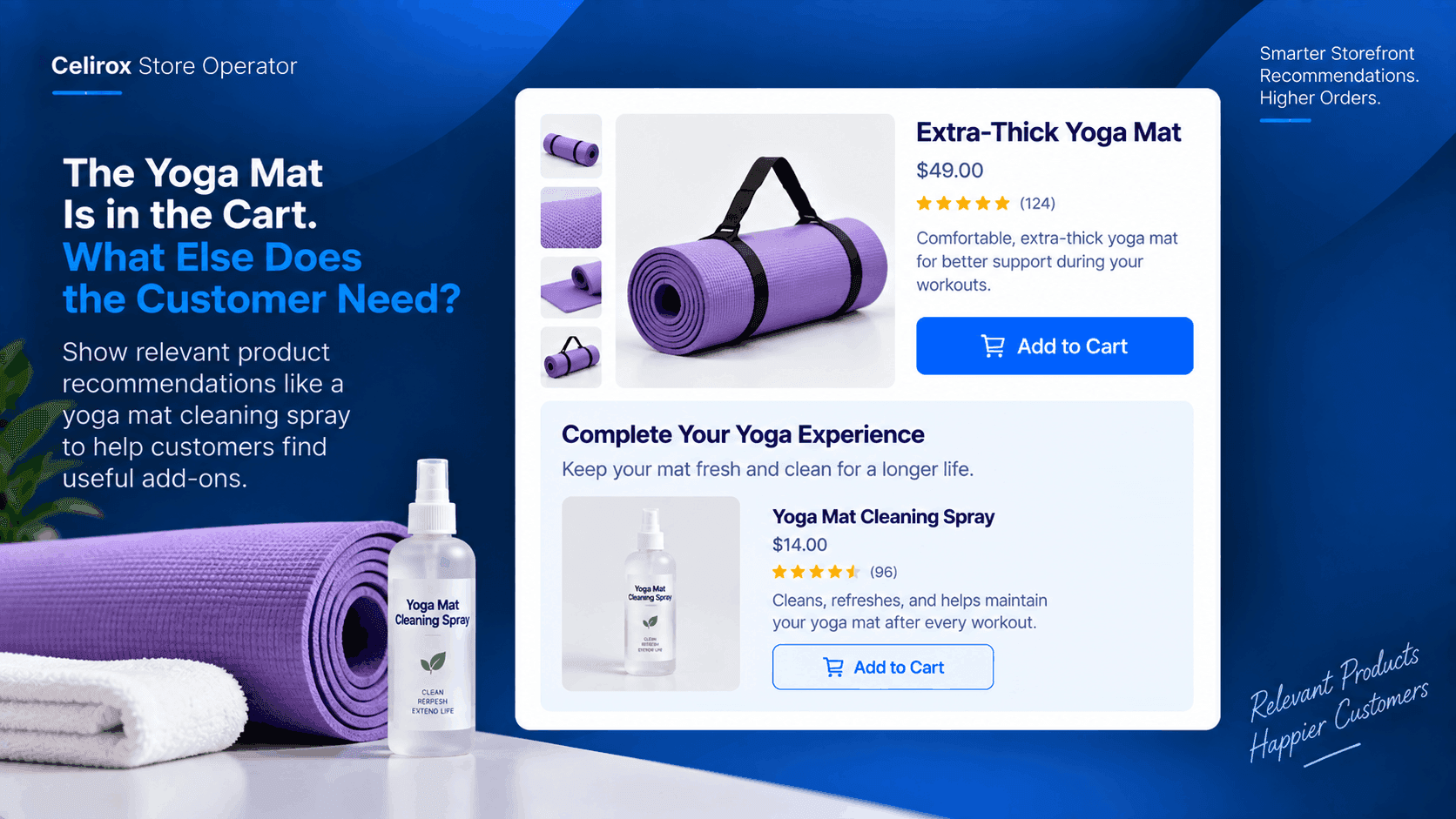
A customer is shopping for a yoga mat.
They find an Extra-Thick Yoga Mat that looks comfortable and suitable for their workouts.
They are interested.
But buying the mat is only part of owning it.
After regular workouts, the mat needs to be cleaned and maintained.
The store already sells a yoga mat cleaning spray.
The problem is that the customer may never see it.
It is sitting somewhere else in the store while the customer is focused on the mat.
That is a missed opportunity to help the customer find something genuinely useful.
The Customer Is Focused On One Product
When someone visits a product page, their attention is usually on that product.
They are checking its features.
They are looking at the images.
They are comparing the price.
They are deciding whether to buy it.
They may not think about what they will need after purchasing it.
For the fitness store, this creates a simple merchandising opportunity.
The Extra-Thick Yoga Mat naturally relates to products used to clean and maintain it.
The store can make that connection visible.
The Cleaning Spray Is Easy To Miss
The store already has the product.
It may already have a product page for the cleaning spray.
But that doesn't mean customers buying yoga mats will find it.
The customer might search for “yoga mat” and never look at the cleaning products category.
They could complete their purchase without ever knowing the spray exists.
The store isn't missing a product.
It is missing the connection between two products.
Show The Relevant Product
This is where a product-based storefront recommendation can help.
When a customer views the Extra-Thick Yoga Mat, the store can present the Yoga Mat Cleaning Spray as a relevant recommendation.
The message doesn't need to be complicated.
It can simply explain why the product is being shown.
Something like:
Keep your mat fresh after every workout.
The customer can then decide whether the cleaning spray is useful for them.
This Isn't Just Another Upsell
There is an important difference between showing a random product and showing something connected to what the customer is already buying.
A customer shopping for a yoga mat is already thinking about workouts.
A cleaning spray has a clear relationship with the product.
The recommendation makes sense because it supports the use of the item.
The store isn't simply saying:
“Buy something else.”
It is saying:
“If you're buying this, you may also find this useful.”
That creates a much more natural shopping experience.
One Product Can Trigger The Recommendation
The store doesn't have to show the cleaning spray to everyone.
Someone browsing running shoes doesn't necessarily need it.
Someone looking at dumbbells doesn't necessarily need it.
The recommendation can be connected specifically to the Extra-Thick Yoga Mat.
The workflow becomes:
Customer views the yoga mat → product is recognized → relevant cleaning spray is shown.
The recommendation is triggered by the customer's actual shopping context.
Help The Customer Think Ahead
Customers don't always know everything they need when they buy a product for the first time.
Someone purchasing their first yoga mat may not have considered how they will clean it.
A useful recommendation can answer that question before they leave the store.
Instead of making the customer search through different categories, the store can put the relevant product directly in front of them.
That saves the customer a step.
And it gives the store another opportunity to make a useful sale.
Keep The Recommendation Simple
The store doesn't need to fill the product page with recommendations.
One relevant product can be enough.
For the Extra-Thick Yoga Mat, the cleaning spray has an obvious connection.
The customer can see it.
Understand why it is being recommended.
And decide whether they want it.
That is better than overwhelming the shopper with a long list of unrelated accessories.
A Better Storefront Connection
Product recommendations work best when they reflect how customers actually use products.
The fitness store already understands the relationship:
Yoga mat → regular workouts → cleaning → cleaning spray.
The customer may not think through every part of that journey while shopping.
The storefront can help by making the relevant next product easier to discover.
Store Operator can support storefront automation and product-based recommendation workflows. :contentReference[oaicite:0]{index=0}
The Recommendation Can Happen Automatically
Without automation, someone on the store team has to decide which products should be recommended and make sure the recommendation appears in the right place.
As the catalog grows, maintaining those relationships manually can become another task.
With a product-based storefront workflow, the store can define the relationship once.
Then the relevant recommendation can appear when the customer interacts with the associated product.
The team doesn't have to manually remember to show the cleaning spray every time someone shops for the yoga mat.
The Customer Gets More Context
A good recommendation can do more than increase the cart value.
It can make the purchase itself more useful.
The customer came looking for an Extra-Thick Yoga Mat.
They leave knowing there is also a product available to help maintain it.
That creates a more complete shopping experience without forcing the customer to search for related products themselves.
The recommendation becomes part of the product discovery process.
Frequently Asked Questions
Can Store Operator recommend products based on what a customer is viewing?
Store Operator supports storefront automation and product-based recommendation workflows, allowing merchants to create relevant storefront experiences around products. :contentReference[oaicite:1]{index=1}
Why recommend cleaning spray with a yoga mat?
A cleaning spray is directly related to maintaining a yoga mat. The recommendation can help customers discover a useful product they may not have searched for separately.
Does the store need to recommend many products?
No. This example focuses on one product relationship: the Extra-Thick Yoga Mat and its relevant cleaning spray.
Is this the same as showing random upsells?
No. The recommendation is based on the relationship between the products and the customer's shopping context.
Can the store choose which product is recommended?
The storefront workflow can be configured around the store's chosen product relationships and recommendation strategy.
Make Useful Products Easier To Find
The customer came looking for an Extra-Thick Yoga Mat.
They may not have come looking for cleaning spray.
But once they see the relationship, the recommendation makes sense.
That is what a useful storefront recommendation should do.
It should not simply put another product in front of the customer.
It should help them discover something that fits the product they are already considering.
For the fitness store, the connection is simple:
Extra-Thick Yoga Mat → Yoga Mat Cleaning Spray.
Store Operator can help turn that product relationship into an automatic storefront experience.
When a customer chooses a product, help them discover what naturally goes with it.