A Customer Buys Once and Disappears: Turn Past Buyers Into Repeat Customers
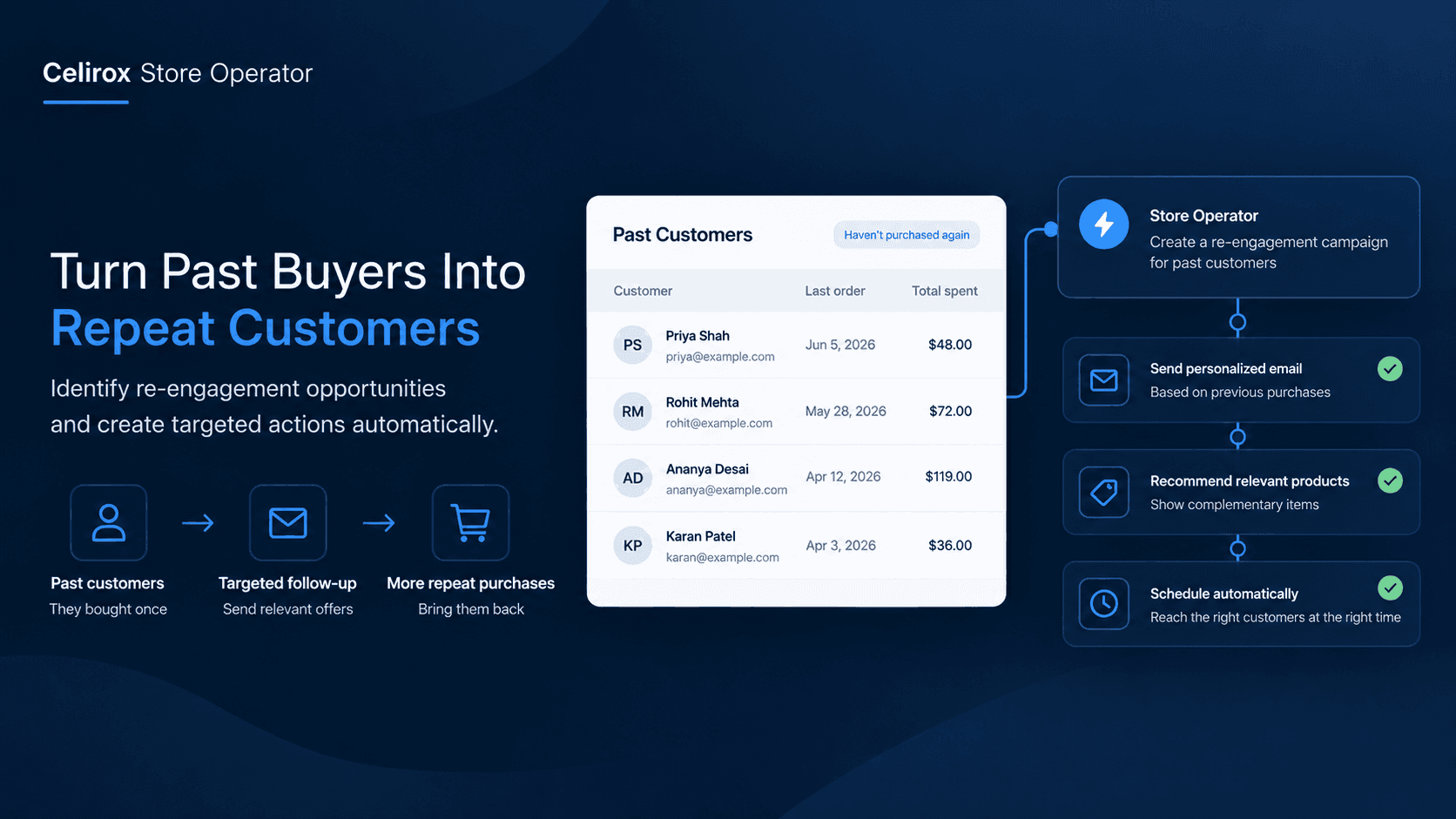
The First Order Isn't The End
A customer discovers the store.
They find a product they like.
They complete checkout.
The merchant gets the order and moves on to the next customer.
But weeks later, something becomes noticeable.
The customer never comes back.
This happens quietly across many Shopify stores. A merchant can have hundreds or thousands of previous buyers, yet still spend most of their attention trying to acquire completely new customers.
The opportunity may already be sitting inside the store's existing customer base.
When Customers Don't Return
Imagine a skincare store.
A customer purchases a cleanser.
The order is completed successfully.
The merchant knows the customer bought something, but nothing happens afterward.
The customer may still like the brand.
They may simply have forgotten about the store.
They may not know what to buy next.
Or they may have reached the point where they are ready for another purchase but have received no reason to return.
Multiply that by hundreds of customers, and a significant part of the store's existing audience can become inactive.
Find The Customers Worth Reaching
Not every previous customer needs the same follow-up.
Someone who purchased yesterday probably does not need a re-engagement message.
Someone who purchased several weeks ago and has not returned may be more relevant.
A customer who has purchased multiple times may deserve a different experience from someone who has only purchased once.
The useful question becomes:
Which past customers have a realistic reason to come back now?
Store Operator can help merchants identify these opportunities instead of relying entirely on manual customer lists and guesswork.
Turn Purchase History Into Action
Purchase history contains useful context.
A merchant can understand what a customer previously bought and use that information to decide what type of follow-up makes sense.
For example, a fashion store may identify customers who previously purchased a particular category and introduce related products.
A beauty store may reconnect with customers around products that naturally lead to another purchase.
A pet store may highlight products related to what a customer has bought previously.
The goal is not to send the same message to everyone.
It is to make the next interaction more relevant.
Create A Reason To Return
A repeat purchase usually needs a reason.
That reason does not always have to be a large discount.
It could be:
- A relevant new product.
- A complementary product.
- A timely offer.
- A new collection.
- A product related to a previous purchase.
- A reminder at the right point in the customer journey.
The merchant decides what makes sense for the store.
Store Operator helps turn that decision into an operational workflow instead of leaving the opportunity buried in customer data.
One Customer, One Useful Context
Consider a customer who purchased running shoes.
Sending them a completely unrelated promotion may not accomplish much.
But highlighting products that make sense alongside their previous purchase can create a much more relevant reason to return.
The same principle applies across different stores.
A home décor customer can be shown complementary products.
A fashion customer can discover new arrivals related to their previous category.
A beauty customer can discover another product that fits their previous purchase.
The customer's history provides context for the next interaction.
Stop Treating Every Customer The Same
A store's customer base is not one audience.
Some customers are new.
Some are active repeat buyers.
Some purchased once and disappeared.
Some have not purchased for a long time.
Some regularly buy from a particular category.
Treating all of them identically wastes useful information.
Store Operator gives merchants a way to build workflows around meaningful customer situations rather than treating every past buyer as another generic marketing contact.
Make Repeat Purchases Operational
The biggest challenge is often consistency.
A merchant may understand that repeat purchases matter, but remembering to review customer activity every week and manually find suitable customers is difficult.
Store Operator can help turn that recurring responsibility into a structured store operation.
Instead of waiting for a merchant to remember:
Check past customers → Find opportunities → Decide who matters → Create an action
the process can become part of the store's ongoing workflow.
This is where automation becomes useful.
Measure What Comes Back
Re-engagement should not stop at sending an offer or recommendation.
Merchants need to understand whether the effort actually produces another purchase.
Useful results can include:
- Customers re-engaged.
- Follow-up interactions.
- Repeat purchases.
- Revenue generated.
- Customer segments producing the strongest results.
These results help merchants understand which customer opportunities are worth pursuing further.
Over time, the store can move from simply acquiring customers to making more value from the customers it has already earned.
Build A Stronger Customer Cycle
The traditional store mindset can look like this:
Find customer → Get first order → Move on
A stronger lifecycle looks different:
Find customer → Get first order → Understand purchase → Re-engage → Earn repeat purchase
That second purchase can be important because the merchant is no longer starting the relationship from zero.
The customer already knows the store.
They have already completed checkout.
They already have experience with the brand.
The next purchase starts with existing trust.
Let Store Operator Handle The Repetition
Merchants should not have to manually inspect their customer base every day just to find people who may be ready to return.
The valuable part is deciding what kind of customer experience makes sense.
Store Operator can help with the repetitive operational work around identifying opportunities and setting up the corresponding actions.
That gives merchants more time to focus on the strategy while the store's ongoing customer activity becomes easier to manage.
Turn One Order Into More
Every new customer represents more than one potential transaction.
A first purchase can become the beginning of a longer customer relationship.
When merchants understand who has purchased, what they bought, and when it makes sense to reconnect, they can create more relevant opportunities for customers to return.
Celirox Store Operator helps Shopify merchants turn that repeat-purchase opportunity into an organized store workflow.
The goal is simple:
Don't just win the first order. Build the path to the next one.
Frequently Asked Questions
What is repeat-customer automation?
Repeat-customer automation uses customer and purchase information to identify opportunities to reconnect with previous buyers and encourage another purchase through relevant actions.
Why should Shopify stores focus on past customers?
Past customers have already purchased from the store and have existing familiarity with the brand. Re-engaging them can create opportunities for additional purchases instead of relying entirely on new customer acquisition.
Should every previous customer receive the same follow-up?
No. Customers have different purchase histories, interests, and levels of activity. More relevant follow-up can be based on factors such as previous purchases and customer activity.
Can repeat-customer workflows include product recommendations?
Yes. Merchants can build workflows around products or categories that are relevant to what customers previously purchased.
How does Store Operator help?
Celirox Store Operator helps merchants identify store opportunities and create operational workflows around them, reducing the need to repeatedly perform these tasks manually.
Bring Customers Back Smarter
Your store already has customers who know your brand.
Some of them may simply need the right reason to return.
Instead of letting past buyers disappear into a customer list, merchants can use purchase context and store activity to create more relevant re-engagement opportunities.
Celirox Store Operator helps turn that opportunity into an ongoing store operation.